
Wrist Arthroscopy
Your wrist is a complex joint made up of eight small bones called carpal bones. These bones are supported by connecting ligaments. Various conditions can affect your wrist joint such as carpal tunnel syndrome, osteoarthritis and others.
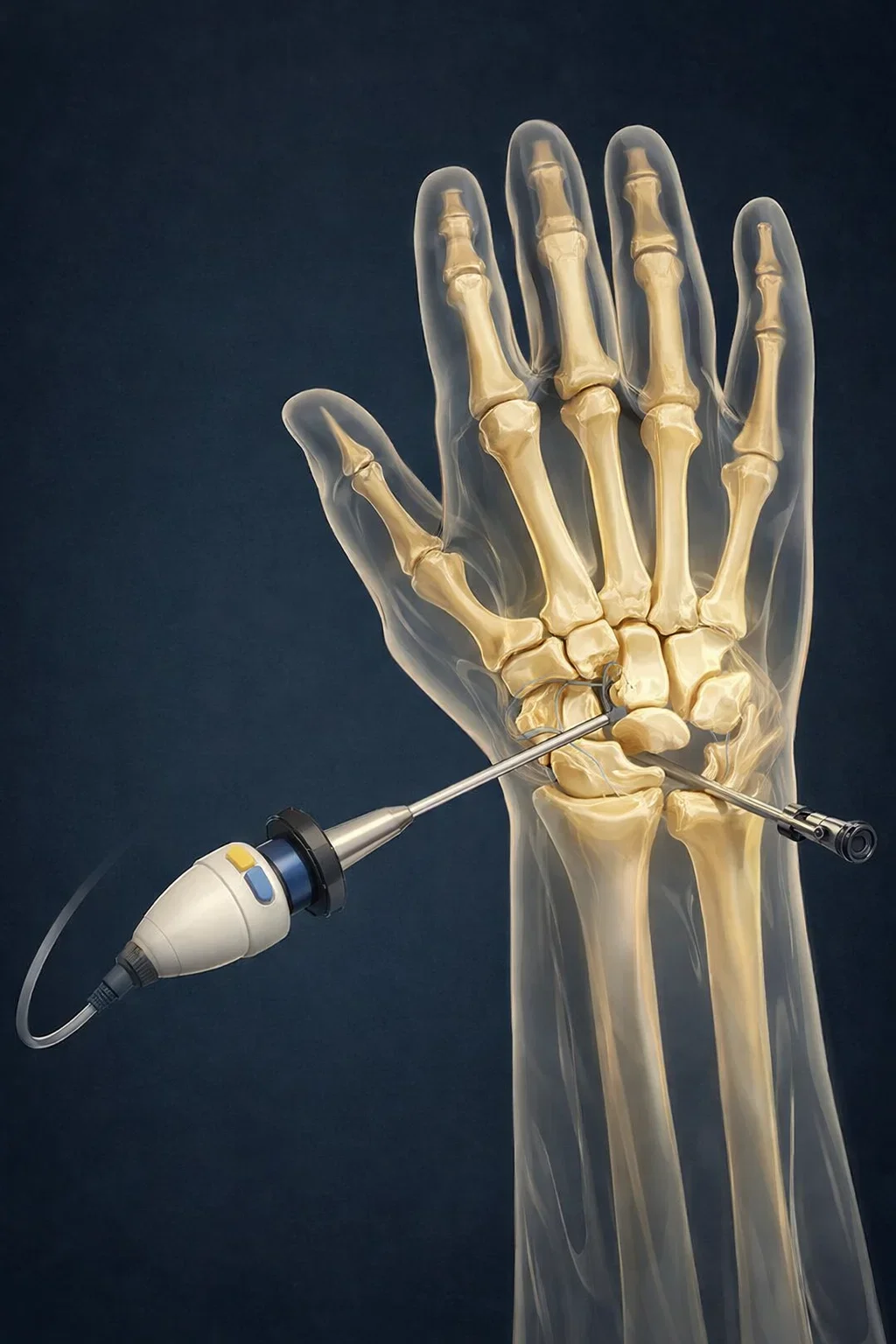
Wrist arthroscopy is a minimally invasive surgical procedure performed to view, diagnose, and treat problems of your wrist joint.
Indications
Surgical procedure
Wrist arthroscopy may be necessary to help in diagnosing:
stiffness
unexplained pain
swelling and
giving way or popping of the joint
Wrist arthroscopy is also used to treat conditions such as:
arthritis
chronic wrist pain
wrist fractures
ligament tears
ganglion cysts and
carpel tunnel syndrome
Wrist arthroscopy is usually performed under regional anesthesia. You will be awake but will feel no sensation in your hand and arm during your procedure. You may be given a sedative to keep you relaxed.
Your doctor will make one or two small half-inch incisions, known as portals, on the back of your wrist. The portals are placed in specific locations on the wrist, depending on the areas that need to be visualized. The arthroscope and special surgical instruments are inserted into your wrist through these portals. The arthroscope is a thin tube with a camera, lens and light source. Your doctor will be guided by the images relayed from the arthroscope onto a video monitor throughout your procedure. Your doctor will perform any necessary repairs depending on your particular problem.
After the procedure, the portals are closed with small stitches and a dressing is applied. You may be instructed to wear a splint for a short time after the procedure.
Postoperative Care
Keep your hand elevated above the level of your heart for the first 2 to 3 days after your procedure
Keep your bandage clean, dry, and intact
You may apply ice over the operated area to reduce swelling and discomfort
You will be instructed on special exercises to regain strength and mobility of your wrist
You will be prescribed pain medications to relieve any pain
Advantages
Recovery following wrist arthroscopy is generally more comfortable for the patient than an open surgery which requires a larger incision. There is usually less pain following the procedure and the healing time is faster when compared to an open procedure. Wrist arthroscopy is performed as a day surgery where most patients are able to go home within several hours after their surgery.
Risks and complications
Complications are fairly rare with wrist arthroscopy. However, some of the possible complications that can occur include scarring, bleeding, swelling, infection, numbness and injury to adjoining structures.

Workers’ Compensation
& Insurance
Dr. Khan is a Qualified Medical Evaluator (QME) who specializes in care for work-related hand, wrist, and elbow injuries. He also accepts private insurance and personal injury cases.

READY TO GET BACK
TO PEAK PERFORMANCE?
Expert care for your hand, wrist, and elbow,
so you can move, work, and perform without limits.